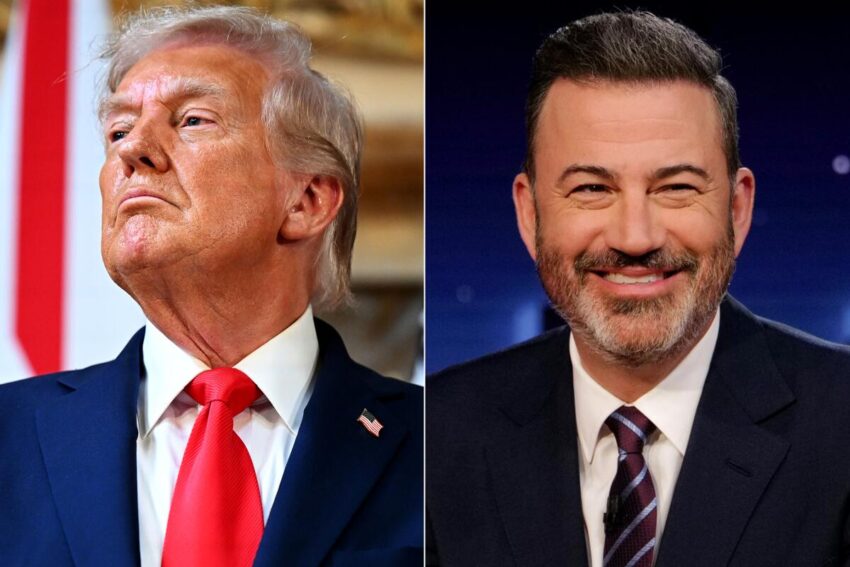

The return of Jimmy Kimmel to ABC’s airwaves sparked an unusual alignment, temporarily uniting the late-night comedian with several conservative figures. This unexpected alliance formed amid concerns over federal regulators’ attempts to potentially silence him, even as President Trump continued to express displeasure with the network.
Kimmel himself acknowledged this unusual situation, thanking those who supported his right to share his beliefs, even if they disagreed with his views. This followed a period during which Trump had increased efforts to counter political opposition and what he perceived as biased media coverage. These efforts included lawsuits and regulatory actions, causing worry among both the president’s supporters and influential conservative voices.
The controversy erupted following Kimmel’s comments regarding the “MAGA gang” and their perceived exploitation of Charlie Kirk’s slaying for political gain. Brendan Carr, a Trump loyalist and head of the Federal Communications Commission (FCC), criticized Kimmel’s actions as “the sickest conduct”. Carr suggested regulatory consequences could affect local television stations if their programming didn’t serve the public interest. This sparked a debate about free speech and the role of government in regulating it.
After Disney removed “Jimmy Kimmel Live!” from ABC’s schedule, some prominent Trump allies expressed concern that the threat of regulating speech had gone too far. They feared that conservatives could be targeted next if the federal government pursued similar actions. Senator Ted Cruz, a frequent critic of Kimmel, voiced worries that such tactics could lead to a “slippery slope to oblivion.” He likened Carr’s threats to mafia-like maneuvers, emphasizing the potential for abuse of power.
Trump, however, was displeased by Kimmel’s return and threatened legal action, echoing his pattern of suing media outlets for negative coverage. He suggested a lawsuit against ABC, potentially seeking a “lucrative” settlement, and criticized Kimmel’s ratings.
The combined impact of Trump’s legal threats and Carr’s comments fueled a sharp debate surrounding free speech. The core question was whether these actions were intended to level the playing field for conservative voices or to silence liberal ones. As a result, Carr, who authored an FCC chapter in the right-wing Project 2025 playbook, found himself in the media spotlight and subject to a congressional inquiry.
Senator Adam Schiff and several other Democratic senators formally expressed strong concern over the FCC’s possible involvement in Kimmel’s suspension. They demanded clarification on the agency’s role and its justification for any actions taken. The senators emphasized that the FCC’s regulatory authority should not be used to silence criticism or punish satirical commentary. They underscored that the agency’s mission is to serve the public interest, not to act as a tool for political retribution.
California Attorney General Rob Bonta also weighed in, accusing the Trump administration of a “dangerous attack” on those who voice dissent. He urged Carr to reaffirm his commitment to defending free speech, specifically by disavowing his previous remarks about Kimmel.
In the wake of Kimmel’s temporary sidelining, even those who had previously criticized the late-night host expressed concerns about the FCC’s potential overreach. Former Senate Republican Leader Mitch McConnell stated that while one might not agree with someone’s views on television, the government should not interfere. Joe Rogan stated the government should not dictate what comedians can say. Candace Owens and Ben Shapiro also voiced their concerns.
Conservative podcaster Tucker Carlson also weighed in, stating that he did not want to see “bad actors” leverage Kirk’s killing to restrict free speech. He hoped that the aftermath of the murder would not be used to introduce hate speech laws.
Kimmel himself addressed the issue in his opening monologue, calling Carr’s tactics “un-American” and comparing them to those used in authoritarian regimes. He emphasized the importance of living in a country that allows for free expression, regardless of whether one agrees with the content.
Carr, during a podcast, had characterized Kimmel’s remarks about Kirk’s alleged shooter as “some of the sickest conduct possible.” He implied that action could be taken to address the situation, potentially leading to further FCC involvement. However, Carr later denied threatening to pull television stations’ licenses or playing a role in Kimmel’s suspension, calling such claims a misrepresentation of the FCC’s actions.
Carr clarified that the FCC aims to empower local television station owners to challenge national programmers, even if they disagree with the content. He stated that the decision to remove Kimmel’s show was made by local stations, not by the FCC. After the show’s return, station owners such as Sinclair Broadcast Group and Nexstar Media Group decided not to air it on their ABC affiliates, potentially highlighting future conflicts within the media landscape.
Carr, in his Project 2025 chapter on the FCC, wrote that the agency should “promote freedom of speech,” but he has also sided with Trump in criticizing broadcasters for alleged bias and stated his intent to use the agency’s power to ensure they better serve the “public interest.”
Bob Shrum, director of the USC Dornsife Center for the Political Future, noted the bipartisan backlash towards the suspension. He found it encouraging that Republicans, like Ted Cruz, had also voiced concerns. He also pointed out that Trump’s social media post, ending with the line, “Let Jimmy Kimmel rot in his bad Ratings,” indicated the limits the president saw on his ability to remove Kimmel from the airwaves.